
What happens in Art Therapy?
Art therapy combines talk therapy with creative expression to help understand what maybe underneath what you’re experiencing. In each session, you'll start with a check-in, then work on your concerns through conversation, art-making, and sometimes gentle movement. For example, if you're navigating conflict, I might invite you to create art depicting the relationship, and your depiction of the figures, their distance, their size — these often reveal things words alone can't capture. I won't interpret your art; instead, I'll reflect what I observe and ask questions to help you gain deeper insights. If you prefer to just talk on any given day, that's completely fine. Art therapy creates space for authentic healing at your own pace.
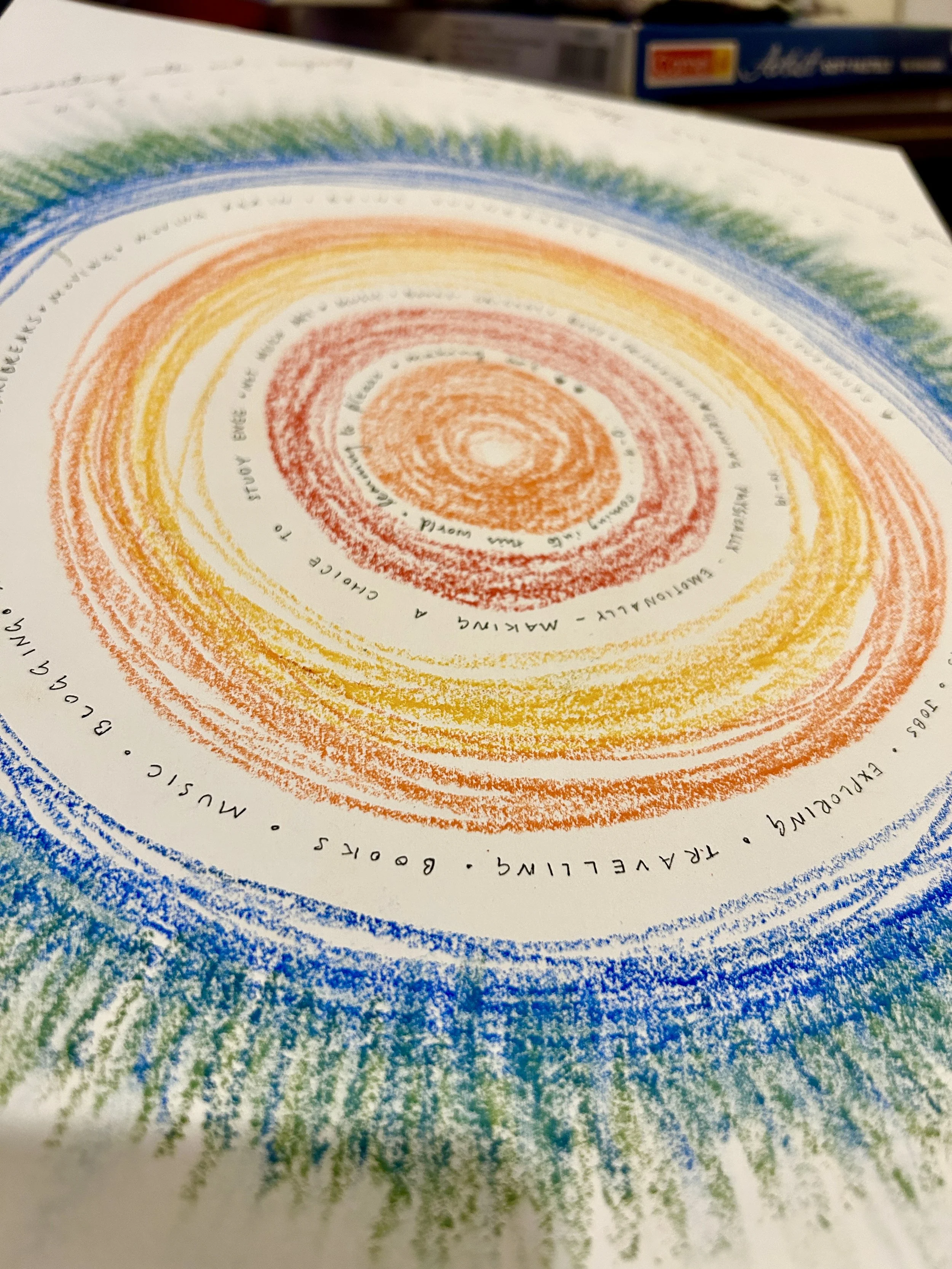
Art therapy combines talk therapy with creative expression to help you get to the bottom of what you’re experiencing.
In each session, you'll start with a check-in, then work on your concerns through conversation, art-making,
I'd love to shed light on what it's like to work with me, and what to expect from a session.
Getting Started
First, we'll schedule a free 15-20 minute discovery call to chat about what you're looking for and get to know each other. No obligations. I believe it's important that we feel comfortable working together for a fruitful therapeutic relationship.
Once you decide to work with me, you'll fill out an intake form and schedule your first session. In that first session, I'll focus on getting to know you, your context, and your concerns. We'll mostly talk, though there might be some art depending on how you feel.
By the second or third session, we might set broad goals and start working towards them.
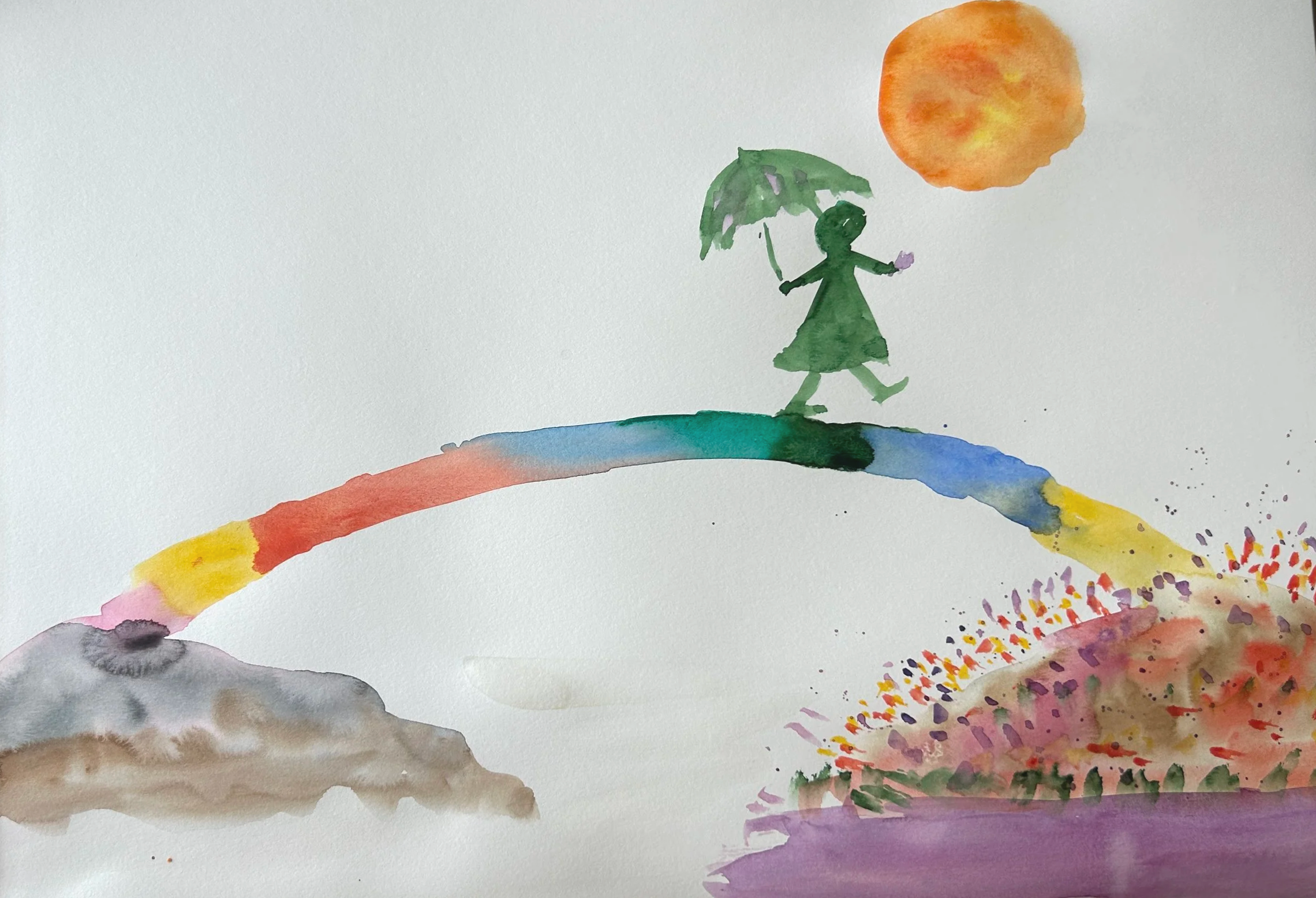
An image from a session with my therapist. I made an image of what it felt like to make the journey from being the person I was expected to be, to be my whole, authentic self.
What a Session Looks Like
Each session starts with a check-in about any immediate updates. Then we move onto what we plan to work on—usually a mix of talk, art, and perhaps some gentle movement.
Here's an example: if you're dealing with a recurring conflict with someone, I might invite you to make art depicting how you see yourself in relation to them. As you create, I might ask about how you've drawn the figures, their distance apart, the sizes you've used. Or we might add psychodrama—I might ask you to take on the role of one of the images and speak as that character.
Maybe you used a metaphor instead—a lion and a sheep, for instance. In both cases, the art becomes an opening point for deeper conversation. Often, art can express feelings about your situation in ways words alone can't. I won't interpret your art for you, but I'll offer what I see and ask if it resonates. I'll ask questions to help you derive your own deeper insights.
We might then move onto writing a poem about the image, or free-writing or journalling about it. (This is an example of using expressive arts therapies, where we combine different modalities, such as visual art, psychodrama and writing.)
And remember: if you need to just talk (or rest) on a given day, that's totally fine. We'll always check in on what feels okay for you and your body. Your experience is always key.
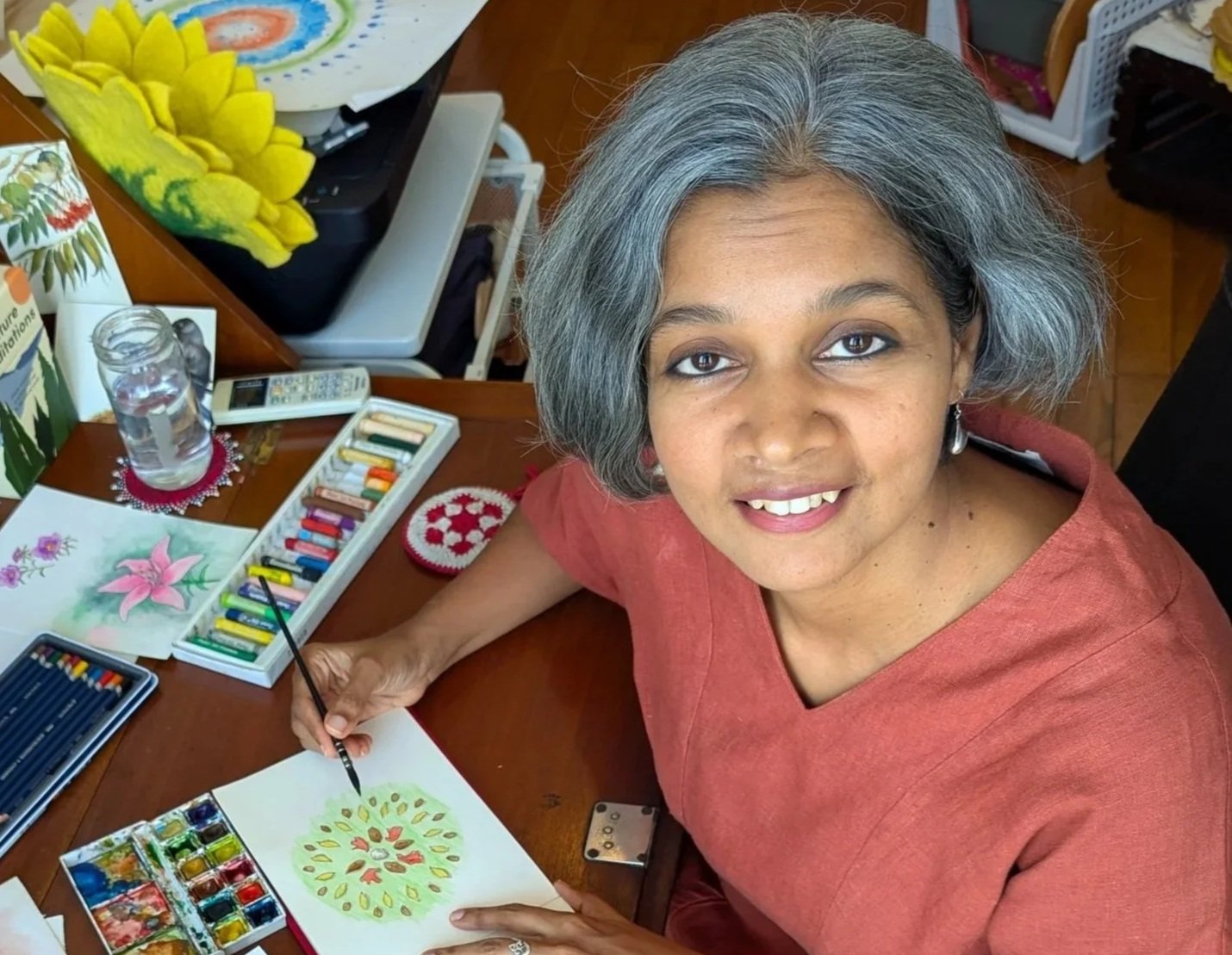
Hello, nice to meet you.
My name is Shub, I’m an expressive arts therapy practitioner and counsellor based in Singapore, and I offer sessions in-person and online. Read more about me.
Ready to experience the power of expressive arts therapy?
Maybe you've been in talk therapy for a while and you feel like you need something a little more, or you are going through something and you would like to see how art therapy might be useful for you. Either way, click below to set up a discovery call, and let's talk.
